Introduction:
One of the hardest parts of starting on Upwork is writing the perfect proposal. Many beginners rely on generic templates, but this can hurt their chances of getting hired. In this article, we will show you real Upwork proposal samples that work and explain why some approaches outperform others. With a bit of personalization and the right structure, you’ll have the confidence to craft proposals that get noticed.
Upwork Proposal Samples That Actually Work for Beginners
Table of Contents
Why Generic Proposals Fail
Proposal Structure Breakdown
Real Proposal Samples (With Analysis)
Common Mistakes to Avoid
Information Gain – Why Simplicity Often Wins
Beginner Mistake Most People Make
Why Generic Proposals Fail
When you’re starting out on Upwork, it’s tempting to use a template proposal and copy-paste it across multiple job postings. However, this approach rarely works. Clients can spot a generic proposal from a mile away. Here’s why generic proposals fail:
They don’t address the client’s specific needs.They often come across as lazy or disinterested.
They lack personalization and make clients feel like they’re just another number.
Expert Warning: Always personalize your proposals. Tailoring each one to the client’s job description is the key to standing out from other freelancers.
Proposal Structure Breakdown
A successful Upwork proposal follows a simple structure that clients appreciate. Here’s how to break it down:
- Introduction
Greet the client by name (if possible) and mention the job title.
Keep this section concise and to the point.
- How You’ll Help
Explain how you will solve their problem. Focus on the value you’ll add rather than just listing your skills.
Pro-Tip: Mention something specific from the job description to show you’ve done your homework.
- Experience and Relevance
Include relevant past projects, especially those that are similar to the one you’re applying for.
Clients love seeing relevant experience to their specific project.
- Clear Next Step
Politely ask for a chat or interview to discuss further. A clear, polite call-to-action can go a long way.
Real Proposal Samples (With Analysis)
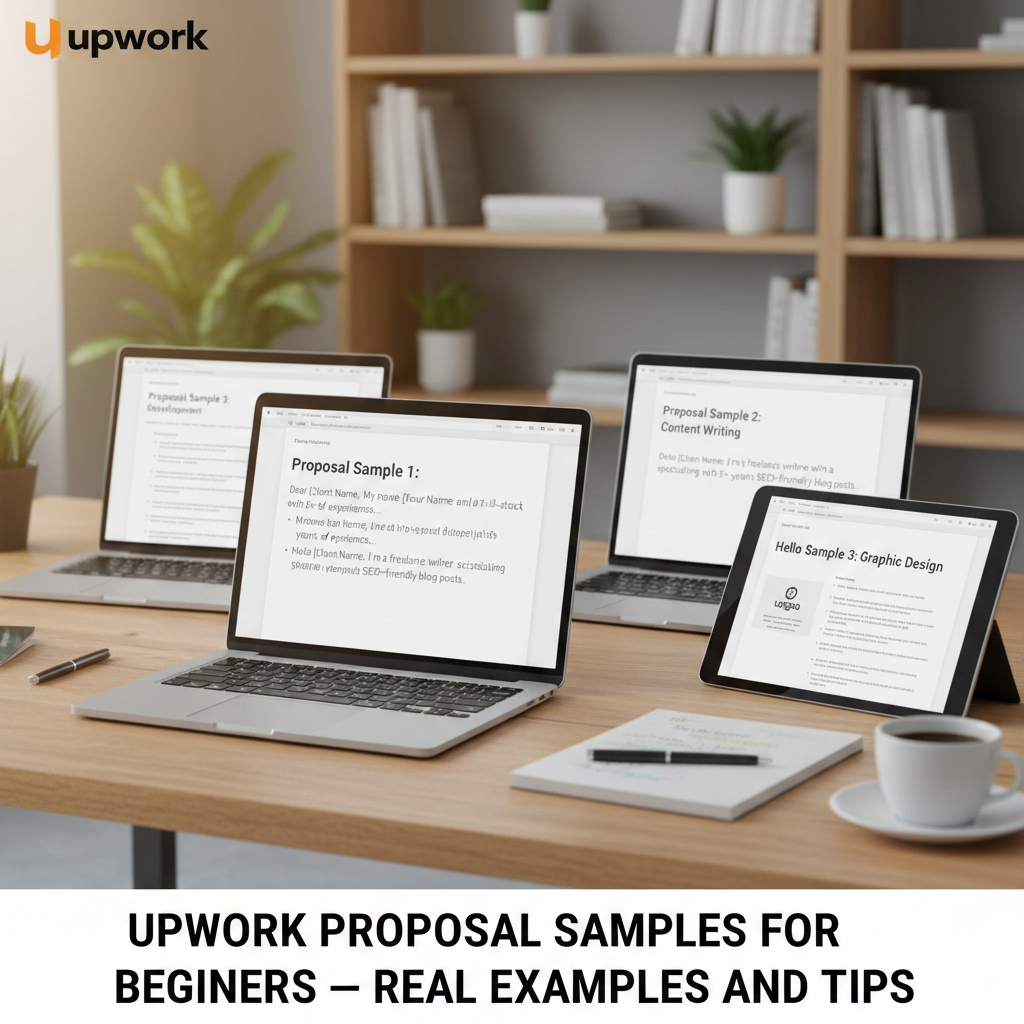
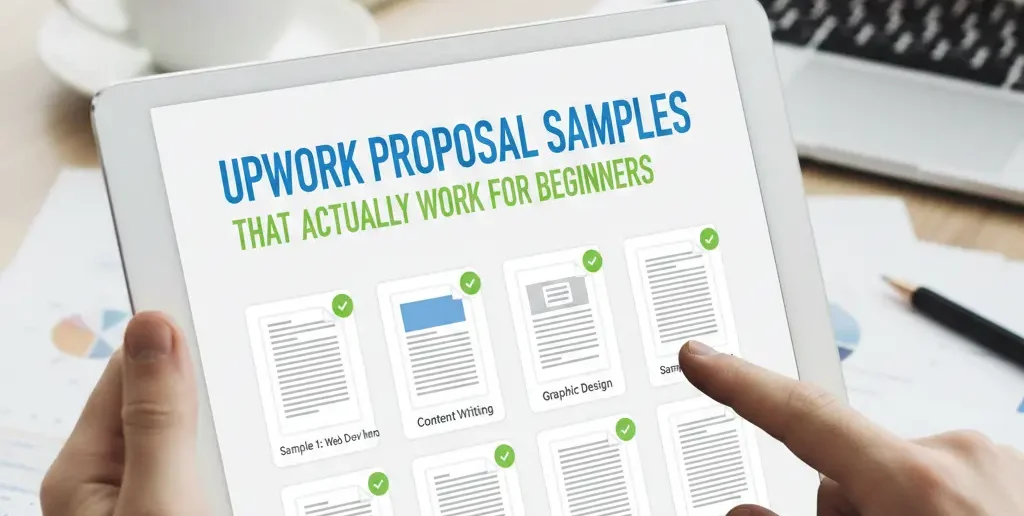
Here are a few real-life proposal examples, along with an analysis of what makes them effective.
Analysis:
Personalized: Directly mentions the client’s name and project.
Problem-solving: Shows understanding of the client’s needs and how to meet them.
Clear next step: Politely asks for a conversation.
Sample 2:
“Hi [Client’s Name],
I’m an experienced [profession]with over [number]years in [industry]. I’ve successfully worked on projects similar to yours, such as [Previous Project]. I’d love to apply my skills to your project and help you achieve [specific goal]. Can we discuss your project in more detail?”
Analysis:
Clear experience: Clearly states the years of experience and relates it to the client’s needs.
Polite and concise: Does not overwhelm the client with unnecessary details.
Professional tone: The tone is professional and respectful.
Common Mistakes to Avoid
- Copy-Pasting Proposals
As mentioned earlier, sending the same proposal to every client can hurt your chances. Customize each one based on the job description.
- Over-explaining
Long proposals are often ignored. Clients don’t have time to read through paragraphs of irrelevant information. Keep it short and focused on how you can help.
- Not Showing Value
Simply listing your skills isn’t enough. You need to show how you can solve their specific problem. Clients want results, not just a list of abilities.
- No Call to Action
Don’t end your proposal without a clear next step. Always ask for a follow-up conversation, even if it’s just a chat.
Information Gain – Why Simplicity Often Wins
Many beginners overcomplicate their proposals by adding too many details or offering unsolicited advice. However, simplicity can often lead to better results. Clients don’t have time to read long, detailed proposals. A simple, direct approach that highlights how you’ll solve their problem is often more effective.
Key Insight: Focus on clarity. Clients appreciate proposals that are easy to read and get straight to the point. Avoid long-winded explanations or excessive details.
Beginner Mistake Most People Make
One of the most common mistakes beginners make is overloading their proposals with free advice. While it’s tempting to show your expertise, giving away too much for free can come across as desperate or self-serving.
Instead, focus on how you can add real value to their project, and offer a solution based on your expertisewithout over-explaining how you’ll do it.
FAQ
Should I always respond to every job posting?
No. Focus on jobs that align with your skills and experience to avoid wasting time.
Can I use the same proposal for every client?
Avoid using the same proposal. Always customize it to match the specific job description.
How do I stand out when I’m new?</strong
Focus on personalization and relevance. Highlight your skills in the context of the client’s needs.
How can I increase my chances of getting hired?
Send high-quality proposals, not just quantity. Tailor each proposal to the job and client.
How long should my proposal be?
Keep it concise—no more than 300 words. Focus on the client’s needs and how you can help.
Conclusion
Crafting the perfect Upwork proposal takes time and effort, but with the right approach, it’s entirely possible to land your first job. Remember, quality over quantity is key—focus on tailoring each proposal to the client’s needs, and don’t be afraid to show how you can solve their problem. With the right balance of personalization, professionalism, and clarity, you’ll increase your chances of getting hired and starting your freelance journey on the right foot.
Internal Links:
https://dailyexact.com/index.php/2026/01/07/seo-upwork-proposal-guideline/