
Introduction
Freelance pricing for beginners is one of the most intimidating aspects of starting out. Set your rates too high, and you risk scaring off potential clients. Set them too low, and you might attract the wrong type of work or burn out. The key is to find a sweet spot—one that reflects your value but still remains competitive in the marketplace.
In this article, we’ll walk you through strategies for pricing your freelance services as a beginner. We’ll also highlight common mistakes and provide actionable tips on how to build confidence in your rates. Whether you’re just starting or looking to adjust your pricing, this guide has you covered.
Table of Contents
Why Freelancers Struggle With Pricing
Factors to Consider When Setting Your Rates
Common Mistakes Beginners Make in Pricing
Information Gain – Why Pricing Too Low Can Hurt You
Practical Insight – How to Build Confidence in Your Rates
Real-World Scenario: Pricing in Action
Why Freelancers Struggle With Pricing
Pricing is a difficult skill to master, especially for freelancers who are just starting out. There are a few reasons why this is so challenging:
Fear of rejection: Many new freelancers worry that if they set their rates too high, clients won’t hire them.
Inexperience: Beginners may not have a clear understanding of how much their skills are worth in the market.
Imposter syndrome: Some freelancers may feel unqualified to charge what experienced professionals do, even though their work is of high quality.
Pro-Tip: It’s normal to feel nervous about pricing at first, but don’t undervalue your work. As your experience grows, you’ll gain a better sense of what your services are truly worth.

Factors to Consider When Setting Your Rates
Setting your rates involves considering multiple factors, not just what others are charging. Here’s what you need to think about when pricing your services:
- Skill and Experience Level
As a beginner, your rates may be lower, but don’t sell yourself short. Consider offering introductory rates for the first few projects to build your reputation, but avoid drastically underpricing.
- Market Rates
Do some research to understand industry standards for your skill set. Check job boards, Upwork, and other freelancing platforms to see what others with your experience level are charging.
- Project Scope and Complexity
Adjust your rates based on the scope of work and the complexity of the project. For example, a simple logo design will likely be priced lower than a full branding package or a website redesign.
- Time and Availability
How much time are you willing to dedicate to each project? If you’re working part-time, you may need to charge higher rates to compensate for the fewer hours you can work.
Pro-Tip: Don’t be afraid to negotiate. Clients expect a bit of back-and-forth on pricing, especially for larger projects.
Common Mistakes Beginners Make in Pricing
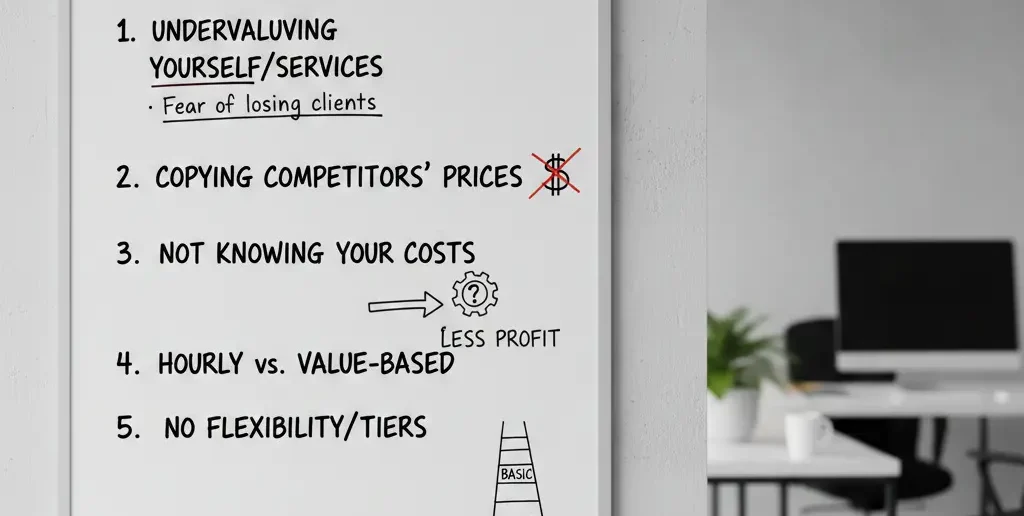
Undervaluing Services
Fix: Don’t set rates that are too low just to get work. Understand the value you bring to the table and price accordingly.
Not Considering Project Complexity
Fix: Make sure your rates reflect the complexity of each project. Don’t offer the same price for a quick job as you would for an in-depth, long-term project.
Overcomplicating Pricing Structures
Fix: As a beginner, keep your pricing structure simple and easy to understand. Avoid hourly rates if they confuse clients. Instead, offer flat-rate pricing for specific tasks.
Not Setting Clear Boundaries
Fix: Be clear about what is included in your price. Ensure that clients know whether revisions are part of the project cost or if additional charges will apply.
Information Gain – Why Pricing Too Low Can Hurt You
It might seem counterintuitive, but pricing your services too low can actually harm your freelance business in the long run. Here’s why:
Attracting low-budget clients: While setting low rates might get you quick clients, they’re often looking for cheap labor, and that mindset can lead to unrealistic expectations and poor client relationships.
Undermining your skills: By pricing too low, you’re telling potential clients that your services aren’t valuable. This can make it harder to raise your rates later.
Key Insight: Start with competitive, fair rates that reflect your experience and the quality of your work. Offering reasonable rates will attract clients who respect your expertise and help you build a sustainable business.
Practical Insight – How to Build Confidence in Your Rates
Building confidence in your pricing is a gradual process, but here are a few practical tips to help you get there:
Track your time: Knowing how long it takes you to complete various tasks can give you insight into how much to charge.
Offer packages: Create service packages at different price points to cater to both low-budget and premium clients.
Test and adjust: Don’t be afraid to adjust your rates as you gain more experience. Track client feedback and see if clients are willing to pay more for your services.
As you work with more clients, your confidence will grow, and you’ll better understand how to charge what you’re worth.
Real-World Scenario: Pricing in Action
Let’s take a look at Emily, a freelance graphic designer. In the beginning, Emily set her prices too low, trying to get as many clients as possible. While she got a few clients, she soon realized that she was spending a lot of time on low-paying projects, which made her feel undervalued. After doing some research and adjusting her pricing, she started charging more in line with industry standards.
As a result, she started attracting higher-quality clients, many of whom were willing to pay her the rates she deserved. This allowed her to work on fewer, but higher-paying projects and invest more time into each job, improving her overall business.
FAQ
How much should I charge as a beginner?
Research industry standards for your skillset, but also consider your experience level and the complexity of the project.
Should I charge hourly or flat rates?
Beginners often find flat rates easier to manage, but hourly rates can work for ongoing projects. Choose the model that suits your workflow.
How do I increase my rates over time?
As you gain more experience and build your portfolio, gradually raise your rates. Clients expect quality, and with proven results, you’ll justify your rate increases.
How can I avoid underpricing?
Be confident in the value you bring and make sure to understand your worth based on industry standards and project requirements.
What if clients reject my pricing?
If a client rejects your pricing, it’s okay to negotiate, but don’t feel pressured to lower your rates. Stand firm on your value.
Conclusion
Pricing your freelance services as a beginner can feel intimidating, but with the right approach, you’ll build confidence and set yourself up for success. Focus on fair rates, understanding the market value of your skills, and communicating your value to clients. By avoiding common mistakes and using smart pricing strategies, you can attract the right clients and grow your freelance business.
Internal Links
How Many Proposals to Send on Upwork to Land Your First Jo 3