
Introduction
Pricing your subscription-based digital products correctly is crucial for both attracting customers and maximizing profits. Whether you’re selling online courses, digital memberships, or software, setting the right price can make or break your subscription business.
In this post, we’ll explore the best practices for pricing your subscription-based digital products. We’ll cover how to determine the right price, offer tiered plans, and maintain profitability while staying competitive.
Table of Contents
Why Pricing Matters for Subscription-Based Digital Products
Factors to Consider When Pricing Your Subscription
How to Choose Between Monthly or Annual Pricing
Setting Different Pricing Tiers for Subscription Plans
Using Psychological Pricing Strategies
Common Mistakes to Avoid in Subscription Pricing
Information Gain – Why Free Trials Can Be a Game-Changer
Practical Insight – Increasing Value Without Raising Prices
Why Pricing Matters for Subscription-Based Digital Products
Your subscription price impacts every aspect of your business. Pricing not only determines how much money you make but also shapes your brand’s perceived value and affects customer acquisition and retention. Here’s why pricing is so crucial:
Attracting the Right Audience: Price is often the first thing people consider when evaluating a subscription. If your price is too high, you might scare away potential customers. If it’s too low, you might attract customers who are less likely to stay.
Profitability: Finding the right price ensures that your business remains profitable while providing value to your subscribers.
Competitive Advantage: Price your product correctly, and you can differentiate yourself from competitors in the same niche.
Pro-Tip: Test different price points and subscription models to see what works best for your audience.

Factors to Consider When Pricing Your Subscription
When setting the price for your digital products, you need to consider several factors that impact both your revenue and customer satisfaction. Here are the most important factors to consider:
- Your Product’s Value
The more value your product offers, the higher the price you can charge. For example, a high-quality, in-depth course or a tool that saves users time or money can justify a higher subscription price.
- Your Target Audience
Consider the spending habits of your audience. Are they budget-conscious or willing to pay more for premium content or services? Researching your audience’s willingness to pay will help you set a price that resonates with them.
- Competitor Pricing
Research your competitors to see how much they charge for similar products. If your product offers more features or higher quality, you can justify charging a premium.
- Operational Costs
Ensure your subscription price covers your business expenses, including platform fees, payment processors, and content production costs. Your pricing needs to support both sustainability and profitability.
Pro-Tip: Don’t just price based on competition. Focus on value proposition and the long-term relationship you aim to build with your customers.
How to Choose Between Monthly or Annual Pricing
One of the first decisions you’ll need to make is whether to offer monthly or annual subscription pricing—or both. Here’s how to decide:
- Monthly Pricing
Monthly pricing is often more attractive to customers who may be hesitant about long-term commitments. It provides affordable access on a shorter-term basis. However, it requires ongoing customer acquisition efforts.
- Annual Pricing
Offering annual pricing can incentivize subscribers to commit for the long term. It’s also more predictable for your business. Many customers are willing to pay in advance for a year of content, especially if there’s a discount involved.
- Hybrid Approach
A hybrid approach can give your subscribers a choice. Offer both monthly and annual pricing, with a discount for those who choose to pay annually. For example, you could offer a 10%–20% discount for annual subscribers.
Pro-Tip: Consider offering an annual plan with a discount to encourage subscribers to commit for a longer period, which increases customer lifetime value (CLTV).
Setting Different Pricing Tiers for Subscription Plans
Offering different pricing tiers can help you cater to different customer segments. Here’s how to structure your pricing tiers:
- Basic Tier
The basic tier should offer limited access to content at an affordable price. This tier is perfect for those who want to test your product or engage with only a portion of your content.
- Standard Tier
The standard tier is your most common option, offering more features or content than the basic plan. This tier should cater to the average subscriber who wants full access to your main offerings.
- Premium Tier
The premium tier should include everything from the lower tiers plus additional perks, such as exclusive content, one-on-one support, or priority access to new features. This tier is for your most engaged customers who are willing to pay a premium for extra value.
- VIP Tier
If you offer highly personalized services or products, the VIP tier can be a high-priced option that provides tailored services or custom content.
Pro-Tip: Keep your pricing tiers clear and distinguishable. Ensure that each tier provides clear value to justify the price difference.
Using Psychological Pricing Strategies
Psychological pricing strategies can help influence customer perception and increase sales. Here are some strategies you can use:
- Charm Pricing
Price your subscription at $19.99 instead of $20.00. Studies show that prices ending in .99 often appear more attractive to customers.
- Anchoring
Display a higher-priced plan first (e.g., $99/month), followed by a lower-priced option ($49/month). The higher price makes the lower price seem more reasonable.
- Bundling
Bundle multiple products or features together and offer them at a slightly discounted price. For example, a premium subscription that includes access to exclusive content and additional resources for a reduced total price.
Pro-Tip: Use bundling to provide more perceived value while keeping your price competitive.
Common Mistakes to Avoid in Subscription Pricing
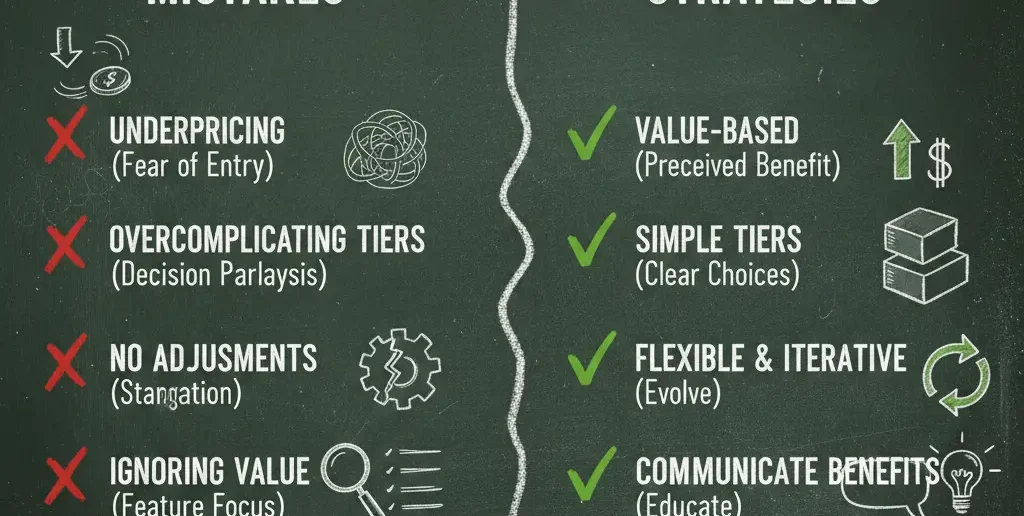
Underpricing Your Product
Fix: Don’t set prices too low just to attract subscribers. Underpricing can devalue your product and make it harder to sustain your business.
Overcomplicating Your Pricing Structure
Fix: Keep your pricing simple and clear. Too many options can confuse potential subscribers and discourage sign-ups.
Not Testing Different Price Points
Fix: Experiment with different price points and subscription models to see what resonates with your audience. A/B testing can help you find the optimal price.
Ignoring Customer Feedback
Fix: Regularly ask for feedback from your subscribers about the pricing and whether they feel it offers good value. Adjust accordingly.
Information Gain – Why Free Trials Can Be a Game-Changer
Free trials can be an excellent way to attract subscribers to your digital product. Here’s why:
Low Barrier to Entry: Free trials allow potential customers to experience your product with no financial commitment, increasing the chances of them subscribing long-term.
Showcase Value: A free trial gives you a chance to showcase the full value of your product, which can convert hesitant customers into paying subscribers.
Conversion Rates: Offering a free trial often leads to higher conversion rates, as users can try before they buy.
Key Insight: Offer a limited-time free trial to encourage sign-ups and showcase your product’s value. This gives potential customers a taste of what they’ll receive before committing.
Practical Insight – Increasing Value Without Raising Prices
To retain customers and grow your subscription business, focus on increasing value rather than constantly raising prices. Here’s how:
Offer Exclusive Content: Provide members-only content, such as additional resources, tutorials, or live Q&A sessions.
Engage Your Audience: Build a sense of community through forums, private groups, or regular interactions with your subscribers.
Personalized Experiences: Offer personalized recommendations or custom content based on subscribers’ activity or preferences.
Pro-Tip: Focus on adding value through continuous content updates and engaging experiences that make your subscribers feel valued.
FAQ
How do I know if my subscription price is too high?
Research your competitors’ pricing and ask your audience for feedback. A/B test different price points to determine what works best.
What’s the best way to price my digital product subscription?
Price based on value. Ensure that your price reflects the quality of your product and is aligned with your target audience’s willingness to pay.
Should I offer monthly or annual pricing for my subscription?
Offer both. Many subscribers prefer monthly payments, but offering a discounted annual plan can help lock in long-term customers.
How often should I adjust my pricing?
Regularly review your pricing strategy based on market trends, customer feedback, and content updates. Adjust as needed but avoid frequent price hikes.
What’s the best way to increase subscription renewals?
Offer exclusive content for long-term subscribers, keep them engaged, and send renewal reminders with special offers or bonuses.
Conclusion
Pricing your subscription-based digital products effectively is crucial to attracting and retaining subscribers. By considering factors like value, competition, and customer willingness to pay, you can find the right price that ensures both customer satisfaction and profitability. Remember, pricing is not static—it’s something that can evolve as you learn more about your customers and improve your product.
Internal Links
How to Retain Subscribers for Your Digital Product Busines 4
External Links
Patreon – Building a Subscription-Based Business
Teachable – Pricing Your Course